Canadian parents know the routine: registration for premium summer camps opens in late May, and that deposit invoice lands with a thud. According to Statistics Canada, the average household spends just $1,158 annually on children's recreation services—yet a single camp deposit can demand $2,500 upfront.
With 27.3% of Canadian households already "very concerned" about meeting future financial obligations according to Statistics Canada's 2025 survey, that May deposit creates a genuine cash-flow crunch for many families.
By the Numbers
- $1,158: Average annual household spending on children's recreation services in 2023 (Statistics Canada)
- 11.06%: Average interest rate on fixed-rate personal loans as of April 2026 (Bank of Canada)
- 20.99%: Typical credit card purchase interest rate at major banks in 2026 (CIBC, RBC disclosure summaries)
- 27.3%: Share of Canadians "very concerned" about meeting financial obligations (Statistics Canada, March 2025)
- $3,500: Average non-mortgage consumer credit balance per Canadian (Equifax Canada, Q4 2025)
The Summer Camp Sticker Shock
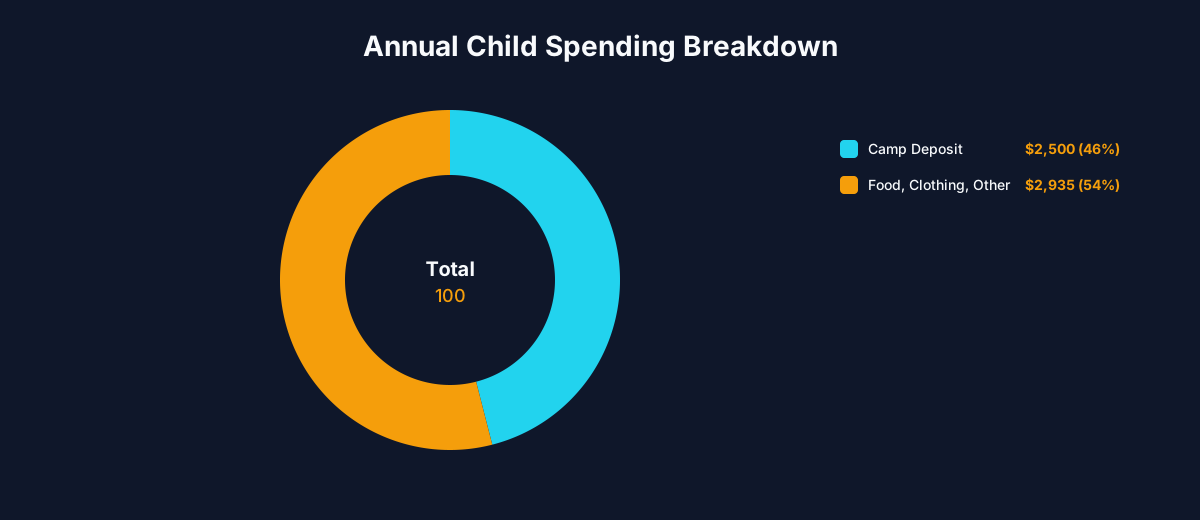
For many families, summer camp represents the single largest child-related expense of the year. Statistics Canada reports that households spend an average of $5,435 annually on all child-related costs, from food to clothing to recreation. A $2,500 camp deposit can consume nearly half that budget in one payment.
The timing compounds the challenge. May and June already bring year-end school expenses, spring sports registration, and the start of summer vacation spending. Adding a multi-thousand-dollar camp payment can push even well-prepared families into temporary borrowing.
Credit Card vs Personal Loan: The Math Matters
When faced with a $2,500 deposit, many parents reflexively reach for the credit card. But the numbers tell a different story.
Major banks like CIBC and RBC charge 20.99% annual interest on standard credit cards according to their 2026 disclosure documents. Meanwhile, the Bank of Canada reports that fixed-rate personal loans average 11.06% as of April 2026—nearly half the credit card rate.
Quick Cost Comparison
| Payment Method | Interest Rate | 12-Month Cost on $2,500 |
|---|---|---|
| Credit Card | 20.99% | $287 |
| Fixed Personal Loan | 11.06% | $147 |
| Variable Personal Loan | 7.20% | $95 |
*Interest calculations based on Bank of Canada April 2026 rates for personal loans and major bank credit card disclosures*
The difference becomes even more pronounced if you can't pay off the balance within a year. That $2,500 camp deposit could easily cost an extra $500+ in interest on a credit card versus a structured personal loan.
Rising Rates Change the Borrowing Landscape
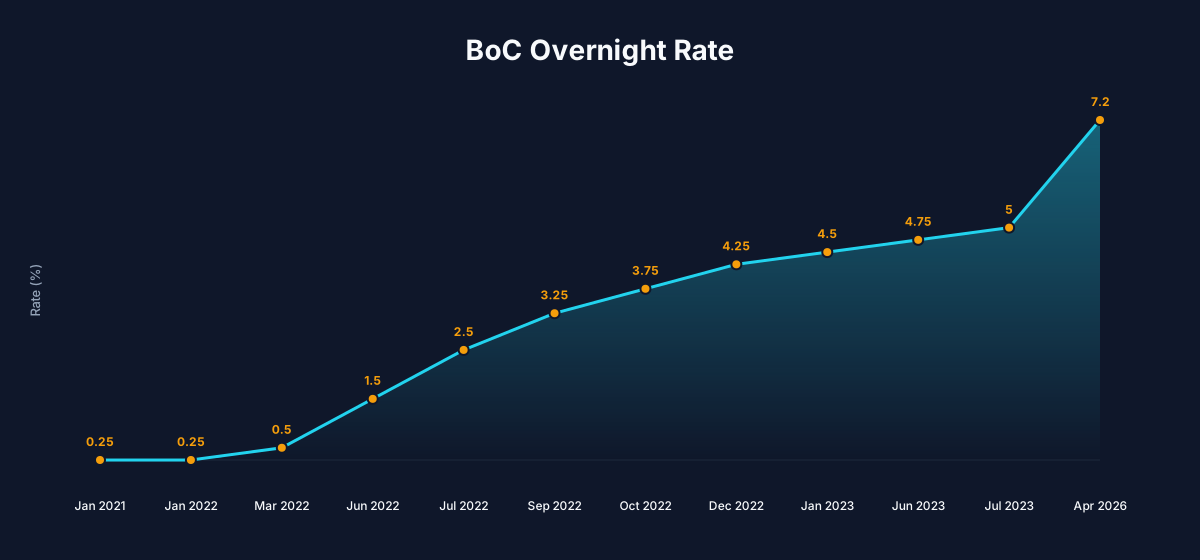
The Bank of Canada's overnight rate sits at 7.2% in early 2026, up from just 0.25% in January 2021. This dramatic increase has reshaped how Canadian families approach short-term borrowing.
Variable-rate personal loans, which the Bank of Canada reports average 7.20% as of April 2026, now cost nearly 30 times what they did five years ago. Fixed-rate options at 11.06% provide payment certainty but come at a premium.
For parents considering how to finance camp deposits, this rate environment makes the choice between variable and fixed more consequential. A variable loan saves money if rates fall, but locks in uncertainty during an already stressful financial period.
Smart Strategies for Managing Camp Costs
Canadian banks typically offer unsecured personal loans starting around $4,000 with terms from one to five years, according to product pages from RBC, TD, and Scotiabank reviewed in April 2026. A $2,500 camp deposit fits comfortably within these parameters.
Here's how to approach the decision:
Start Early
Research camps and their deposit requirements before registration opens. Knowing you'll need $2,500 in May allows you to compare loans and secure pre-approval without time pressure.
Consider Payment Plans
Some camps offer their own payment plans, though these often come with administrative fees. Compare any camp-offered financing against bank personal loan rates to ensure you're getting the best deal.
Leverage Existing Credit Lines
If you have a home equity line of credit (HELOC), rates typically track closer to prime. With the Bank of Canada at 7.2%, a HELOC might offer better terms than an unsecured personal loan.
The Bigger Picture: Managing Family Finances
Equifax Canada reports that the average Canadian carries $3,500 in non-mortgage consumer debt as of Q4 2025. Adding a $2,500 camp deposit would increase this burden by over 70%—a significant jump that requires careful planning.
For families already feeling stretched, it's worth examining whether premium camps align with broader financial goals. Statistics Canada's data showing $1,158 in average annual recreation spending suggests many families find meaningful summer experiences at lower price points.
Frequently Asked Questions
What's the best way to pay a large summer camp deposit?
Based on April 2026 data from the Bank of Canada, fixed-rate personal loans at 11.06% typically cost less than credit cards at 20.99% for amounts like $2,500. Personal loans also provide structured repayment schedules that help families budget monthly payments rather than carrying revolving debt.
How much do summer camp deposits typically cost?
While camp costs vary widely, many premium overnight and specialty day camps require deposits of $2,000-3,000 due at registration. This can exceed the $1,158 that Statistics Canada reports as average annual household spending on all children's recreation services, making it a significant one-time expense.
Should I use a variable or fixed-rate loan for camp expenses?
With the Bank of Canada overnight rate at 7.2% as of April 2026, variable personal loans average 7.20% while fixed rates average 11.06%. Variable saves money if rates fall, but fixed rates provide payment certainty for budgeting. For short-term borrowing under 18 months, the variable option often proves more economical.
Managing summer camp deposits doesn't have to derail your family's financial plans. By comparing borrowing options and understanding the true cost of different payment methods, you can give your kids an amazing summer experience while maintaining financial stability. Ready to find the right financing option? Try our loan payment calculator to see exactly what monthly payments would look like for your situation.