
Canadian university graduates planning to buy their first professional vehicle face a perfect storm: rising auto loan rates, increasing vehicle prices, and thousands of fellow grads competing for the same cars come June.
With the average interest rate on new variable-rate auto loans hitting 8.5% at chartered banks according to Bank of Canada data from March 2025, securing pre-approved financing before the graduation rush isn't just smart — it's essential.
By the Numbers
- 8.5%: Average interest rate on new variable-rate auto loans at chartered banks in March 2025 (Bank of Canada)
- $66,600: Average starting salary for Canadian bachelor's degree graduates employed full-time (Statistics Canada)
- Average transaction prices for new vehicles in Canada have reached significant levels
- A significant proportion of new-vehicle buyers arrange pre-approved financing rather than dealership financing
- 5.0%: 90-day+ delinquency rate on auto loans among Canadians aged 25-34 in Q4 2024 (TransUnion Canada)
The June Graduate Rush Is Real
Every spring, thousands of Canadian university graduates enter the job market with offer letters in hand and transportation needs to fulfill. This predictable surge creates a seller's market at dealerships, especially for entry-level professional vehicles.
The numbers tell the story. New vehicle sales totaled 1.59 million units in Canada during 2024, up 10.8% from the previous year according to DesRosiers Automotive Consultants. This strong demand combined with tight supply pushes prices higher — exactly when new grads need to buy.
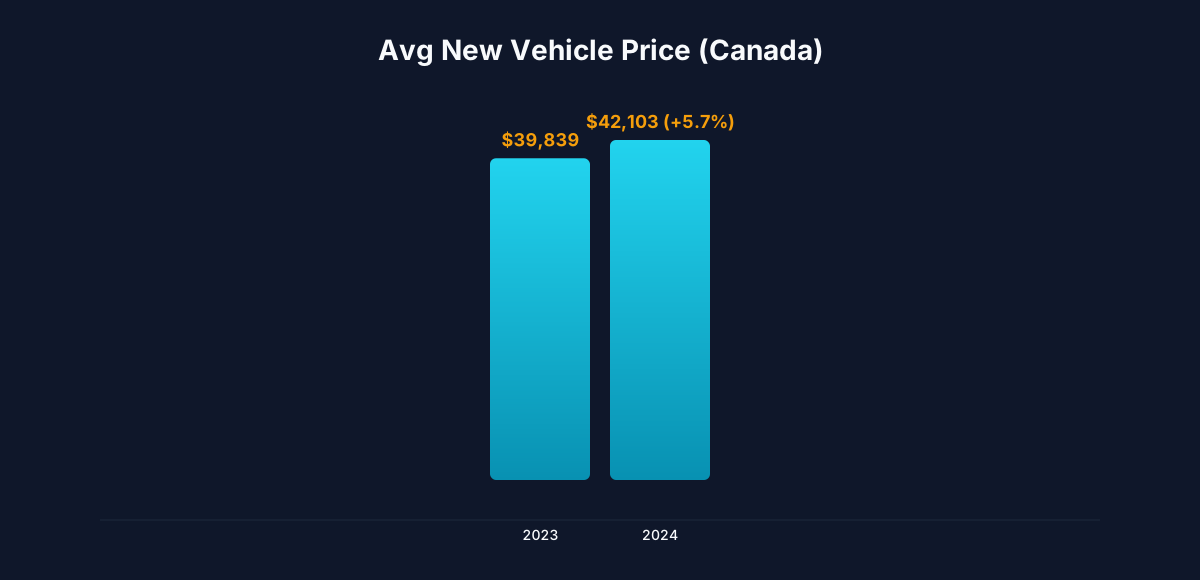
With average transaction prices reaching $42,103 for new vehicles in 2024 according to DesRosiers data, graduates earning the typical starting salary of $66,600 reported by Statistics Canada face a significant financial commitment.
Why Pre-Approval Matters More in 2026
The Bank of Canada's policy rate sits at 7.75% as of March 2025, up from just 0.25% in March 2021. This dramatic 7.5 percentage point increase has flowed directly through to consumer lending rates.
For new graduates, this means the days of cheap car financing are over. The average interest rate on new variable-rate auto loans reached 8.5% at chartered banks in March 2025, compared to 5.4% in March 2022 according to Bank of Canada consumer lending data.
Pre-approval locks in your rate before you shop. It also reveals exactly how much you can borrow, preventing the heartbreak of falling in love with a vehicle outside your budget.
The Hidden Cost of Dealership Financing
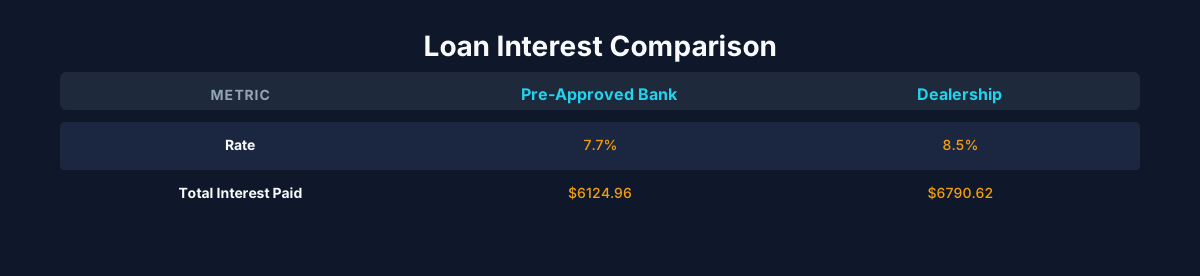
Here's what many first-time buyers don't realize: dealership financing often costs more. J.D. Power Canada research shows that buyers who arranged pre-approved bank financing paid on average 0.8 percentage points less in interest than those who financed at the dealership.
On a $30,000 loan over 60 months, that 0.8% difference translates to significant savings in interest charges.
Comparing Your Auto Financing Options
| Financing Type | Typical Rate Range | Maximum Loan | Key Advantage |
|---|---|---|---|
| Bank Pre-Approval | 6.49% - 8.5% | $30,000 | Lower rates for prime borrowers |
| Credit Union | Varies | Varies | Member benefits |
| Dealership Financing | Varies | Varies | Convenience |
*Rates based on RBC's advertised fixed rates "as low as 6.49%" and Bank of Canada's 8.5% average for variable rates*
The Graduate Debt Reality Check
Before diving into car shopping, consider the broader financial picture. Canadian households spent an average of $45,330 annually on private transportation in 2023 according to Statistics Canada, including vehicle purchases, insurance, fuel and maintenance.
That represents a substantial increase from 2022, outpacing general inflation. For new graduates already carrying student loans, adding a car payment requires careful budgeting
The average auto loan balance reached $35,600 in Q4 2024 according to Equifax Canada, up 3.8% year-over-year. More concerning: TransUnion Canada reports that 5.0% of borrowers aged 25-34 were 90+ days delinquent on their auto loans in Q4 2024, up from 3.7% in Q4 2022.
Smart Borrowing Strategies for New Grads
RBC's auto financing programs offer up to $30,000 for qualified new graduates, with advertised fixed rates as low as 6.49% for terms up to 84 months according to Royal Bank of Canada's February 2025 product disclosures.
But longer terms mean more interest paid overall. A 60-month term typically offers the best balance between affordable payments and total interest costs.
Consider these pre-approval strategies:
- Apply to multiple lenders to compare loans
- Check your credit score first
- Calculate your debt-to-income ratio
- Factor in insurance costs for younger drivers
Timing Your Purchase for Maximum Leverage
The sweet spot for car shopping? Late April through early May, before the June graduation ceremonies flood the market.
With pre-approval in hand, you gain negotiating power. Dealers know you're a serious buyer with guaranteed financing. You can focus on negotiating the vehicle price rather than juggling price and financing terms simultaneously.
Remember: Many Canadian new-vehicle buyers arrange their own financing rather than using dealership options. These buyers save
Frequently Asked Questions
When should new graduates apply for auto loan pre-approval?
Apply for pre-approval 2-4 weeks before you plan to shop for vehicles. Most pre-approvals remain valid for 60-90 days, giving you ample time to find the right car without rushing. Starting in early May positions you ahead of the June graduation rush.
How much can new graduates typically borrow for a car loan?
Lenders typically approve loans based on your debt-to-income ratio and credit history. With the average starting salary of $66,600 for bachelor's degree graduates according to Statistics Canada, most banks will consider loans up to $30,000 for qualified borrowers, as outlined in RBC's auto financing programs.
Does getting pre-approved hurt your credit score?
A single pre-approval application typically causes a small, temporary dip in your credit score (5-10 points). However, multiple auto loan inquiries within a 14-45 day period generally count as a single inquiry for credit scoring purposes, allowing you to shop around without major credit impact.
Ready to get ahead of the graduation car-buying rush? Use LoanIQ's AI loan advisor to estimate your borrowing power and compare pre-approved auto financing options from Canada's top lenders — all without impacting your credit score.