
The Bank of Canada held its overnight policy rate steady at 2.25% for the third consecutive decision on March 18, 2026 (Bank of Canada). For Canadian homeowners with variable-rate mortgages, this pause in rate movements brings both stability and lingering challenges from the past few years of volatility.
While the current 2.25% rate sits at the lower end of what economists consider neutral territory, many mortgage holders still feel the squeeze from when they locked in at higher levels.
By the Numbers
- 2.25%: Bank of Canada overnight policy rate as of March 2026 (Bank of Canada)
- 60%: Mortgage holders renewing in 2025-2026 likely to see payment increases (Bank of Canada)
- 50 basis points: Expected rate tightening in second half of 2026 (Scotiabank Economics)
- 1.4%: Average annual economic growth projected for Canada over 2026-2027 (Bank of Canada)
- 2.25% to 3.25%: Bank of Canada's neutral rate range (Scotiabank Economics)
Recent Rate Decisions Shape Variable Mortgage Landscape
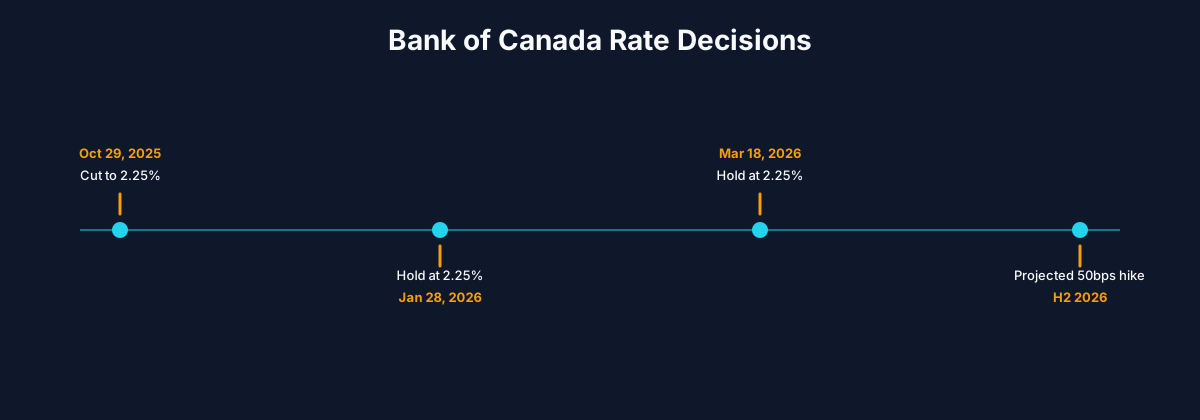
The Bank of Canada's decision to maintain rates at 2.25% through its January 28, 2026 announcement (Bank of Canada) and again in March reflects a cautious approach as the economy transitions. This marks a significant shift from the rate-cutting cycle that brought the policy rate down to 2.25% on October 29, 2025 (Bank of Canada).
Variable-rate mortgage holders have seen their payments stabilize in recent months. However, the relief may be temporary.
Scotiabank Economics projects 50 basis points of policy rate tightening during the second half of 2026 (Scotiabank Economics). This anticipated increase would push variable mortgage rates higher, affecting monthly payments for millions of Canadian homeowners.
Payment Shock Despite Lower Rates
Even with the policy rate at its current 2.25% level, many Canadian mortgage holders face a harsh reality. The Bank of Canada's analysis reveals that 60% of those renewing mortgages in 2025 and 2026 will likely see payment increases compared to December 2024 levels (Bank of Canada).
This seemingly contradictory situation stems from the timing of original mortgage agreements. Many borrowers locked in rates during the ultra-low period of 2020-2022, when emergency pandemic measures pushed rates to historic lows.
Now, despite recent rate cuts, these homeowners face renewal rates substantially higher than their original terms. The impact on household budgets can be significant, particularly as other living costs remain elevated.
Economic Growth and Future Rate Path
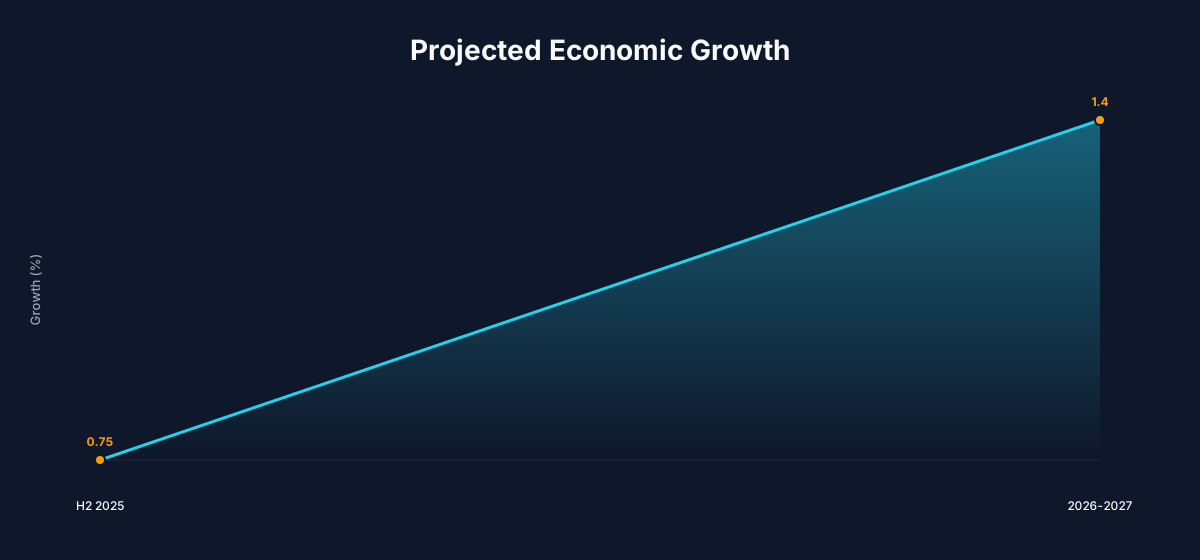
The Bank of Canada projects 1.4% average annual economic growth for Canada over 2026 and 2027 (Bank of Canada). This modest expansion follows a weak 0.75% growth rate in the second half of 2025.
As economic conditions improve, the central bank faces pressure to adjust monetary policy. The current 2.25% policy rate sits at the lower bound of the 2.25% to 3.25% neutral rate range identified by Scotiabank Economics (Scotiabank Economics).
This positioning suggests limited room for further cuts and increasing likelihood of rate hikes as 2026 progresses. Variable-rate mortgage holders should prepare for potential payment increases in the coming months.
Variable vs Fixed Rate Mortgage Comparison
Here's how current conditions affect different mortgage types:
| Feature | Variable Rate Mortgage | Fixed Rate Mortgage |
|---|---|---|
| Current Impact | Payments stable at 2.25% BoC rate | Varies |
| 2026 H2 Outlook | 50 basis points increase expected | No change until renewal |
| Renewal Risk | Immediate impact from rate changes | Protected until term ends |
| Best For | Risk-tolerant borrowers | Payment stability seekers |
Frequently Asked Questions
How does the Bank of Canada rate affect my variable mortgage?
Your variable mortgage rate typically moves in lockstep with the Bank of Canada's policy rate. When the central bank held rates at 2.25% in March 2026 (Bank of Canada), variable mortgage rates remained unchanged. Most lenders add a premium above the policy rate, so your actual mortgage rate will be higher than 2.25%.
Should I lock in a fixed rate before rates rise?
With economists projecting 50 basis points of rate increases in the second half of 2026 (Scotiabank Economics), some borrowers may benefit from locking in. However, this depends on your risk tolerance, financial situation, and current mortgage terms. Use a loan payment calculator to compare scenarios.
Why are mortgage payments increasing despite rate cuts?
The Bank of Canada's finding that 60% of renewals face higher payments (Bank of Canada) reflects the lag effect of monetary policy. Many borrowers secured mortgages at rock-bottom rates years ago. Even with recent cuts bringing rates to 2.25%, renewal rates remain higher than those historic lows.
Navigating today's mortgage landscape requires careful planning and the right tools. Whether you're renewing soon or considering your options, LoanIQ's AI loan advisor can help you understand how rate changes affect your specific situation and connect you with competitive lenders. 💰