Estimate Your MCA Options
Quick estimate based on your revenue. No obligation.
50+ Canadian lenders analyzed · Licensed & regulated only
Self-Employed
Self-employed borrowers face additional scrutiny because income can be variable and tax optimization often reduces reported income. Most lenders want to see 2+ years of self-employment history and consistent income. Tax returns, bank statements, and contracts can serve as proof of income. Some lenders offer "stated income" programs with higher rates but simpler verification.
What This Means for You
Self-employed Canadians represent over 15% of the workforce, yet traditional lending models are built around T4 employment income. This creates a systematic disadvantage: self-employed borrowers typically report lower taxable income due to legitimate business deductions, but this reduced number is what lenders use to assess borrowing capacity. The result is often a gap between your actual financial strength and what traditional lenders see on paper. Understanding how lenders evaluate self-employed income is critical. Most traditional banks use your "line 15000" (net business income) from your tax return, averaged over 2 years. If you've been aggressive with deductions, this number may be significantly lower than your actual cash flow. Alternative lenders and some credit unions have developed "bank statement programs" that look at 6–12 months of deposits to calculate your effective income — this approach often yields a higher qualifying income. The type of self-employment matters too. Incorporated professionals (doctors, lawyers, accountants) with T4 income from their corporation are treated almost like traditional employees. Sole proprietors and freelancers face more scrutiny. Gig economy workers (rideshare, delivery) have the most challenges, but new lending products are emerging for this growing segment. Your best strategy combines timing, documentation, and lender selection.
Your Action Plan
- 1Prepare your last 2 years of personal tax returns (T1) and Notice of Assessment — these are the minimum requirement for most lenders
- 2Gather 6–12 months of business bank statements showing consistent revenue deposits — this supports 'bank statement' lending programs
- 3If incorporated, bring your T4 slips from your corporation alongside corporate financial statements
- 4Calculate your gross revenue vs. net income — be prepared to explain major deductions if your net income appears low
- 5Compile a list of current contracts or recurring clients to demonstrate income stability
- 6If you have seasonal income, apply during or just after your peak season when bank statements show the strongest cash flow
- 7Consider working with a mortgage broker or loan broker who specializes in self-employed borrowers — they know which lenders are most flexible
- 8If your income is growing, provide month-over-month or year-over-year comparisons to show the upward trajectory
- 9Reduce your personal credit utilization below 30% before applying — self-employed applicants with clean personal credit get significantly better terms
Common Questions — Self-Employed
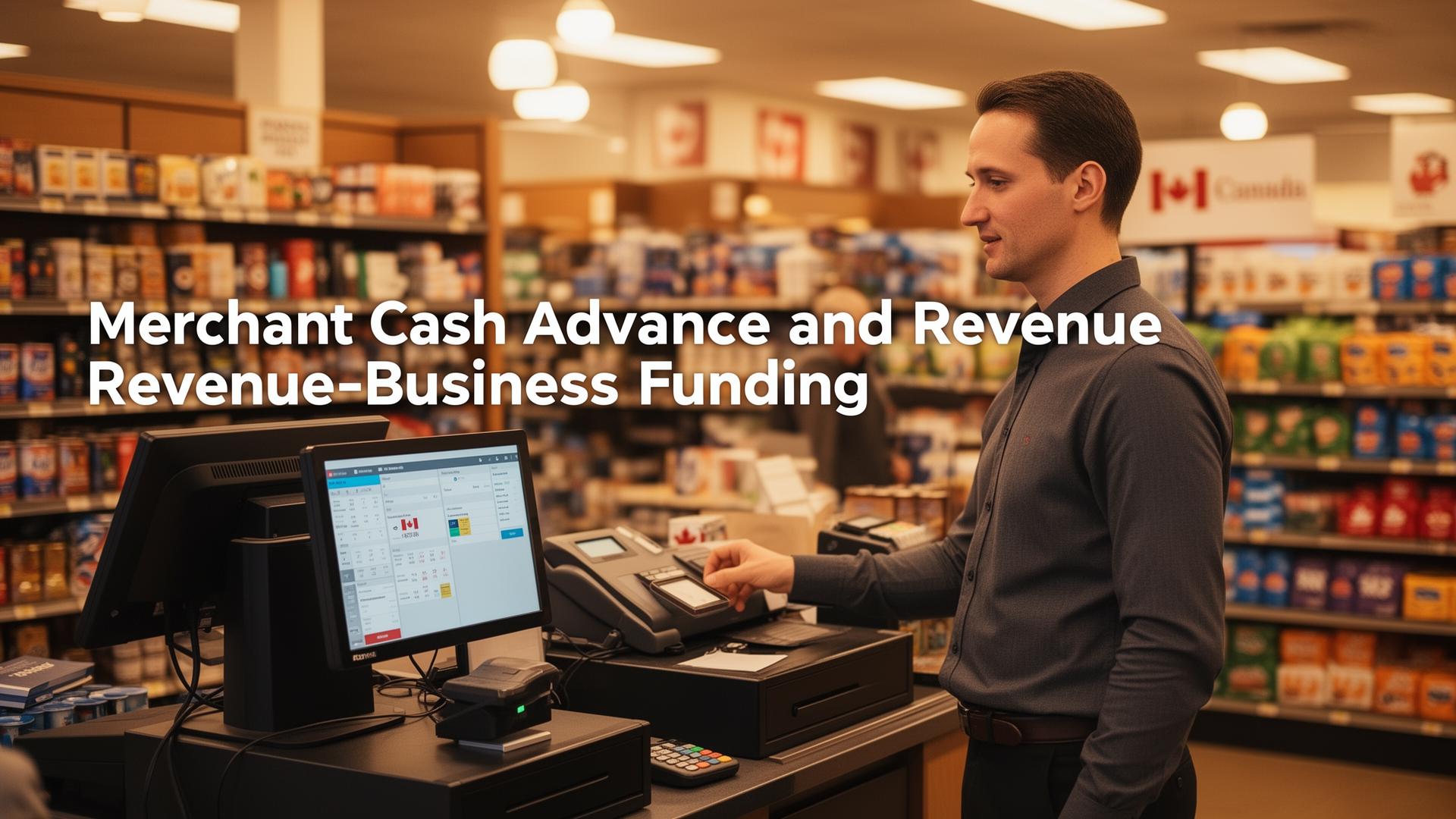
A merchant cash advance (MCA) provides upfront capital repaid through a percentage of your daily credit card or debit sales. It's one of the fastest ways for businesses to access capital — often within 48 hours — and approval is based on your sales volume rather than personal credit.
How It Works
Share your sales data
Monthly card/debit revenue is the key input — that's what determines your advance size.
Quick business profile
Industry, time in business, and desired amount. Under 2 minutes.
See your MCA estimate
Estimated advance amount, factor rate, and daily holdback percentage.
Get funded fast
MCA providers can fund within 48 hours — among the fastest options available.
MCA Qualification Factors
Monthly revenue is the primary qualification factor — not personal credit
Businesses processing $10,000+/month in card sales typically qualify
Time in business: most MCA providers require 6+ months of operation
Industry type affects approval — retail and food service have high approval rates
No collateral required — funding is based on future sales
Estimated Rate Bands
| Credit Tier | Estimated Rate Range | Approval Likelihood |
|---|---|---|
| High Revenue ($50K+/mo) | Factor rate 1.1 – 1.25 | Very High |
| Medium Revenue ($20-50K/mo) | Factor rate 1.2 – 1.35 | High |
| Lower Revenue ($10-20K/mo) | Factor rate 1.3 – 1.45 | Moderate |
* Rates are estimates based on typical lender criteria. Canada's 35% APR Criminal Code cap (in force January 1, 2025) applies to consumer credit agreements; loans to incorporated businesses are commercial agreements and may exceed this rate. Your actual rate may vary. These are not offers.
When an MCA Makes Sense
MCAs work best for businesses with consistent daily sales — restaurants, retail, and service businesses.
Compare the total cost of capital, not just the factor rate, against a traditional business loan.
Use MCA for short-term needs; for larger, longer-term financing, a business term loan may be more cost-effective.
Frequently Asked Questions
Why Trust LoanIQ
Revenue-based — no fixed monthly payments
Funding in as little as 48 hours
No collateral required
Repayment adjusts with your sales volume
Plan With Our Free Calculators
Estimate payments, compare options, check affordability
Considering Other Options?
Explore More on LoanIQ
Blog & Guides
Research & Data
Estimate Your MCA Options
Quick estimate based on your revenue. No obligation.