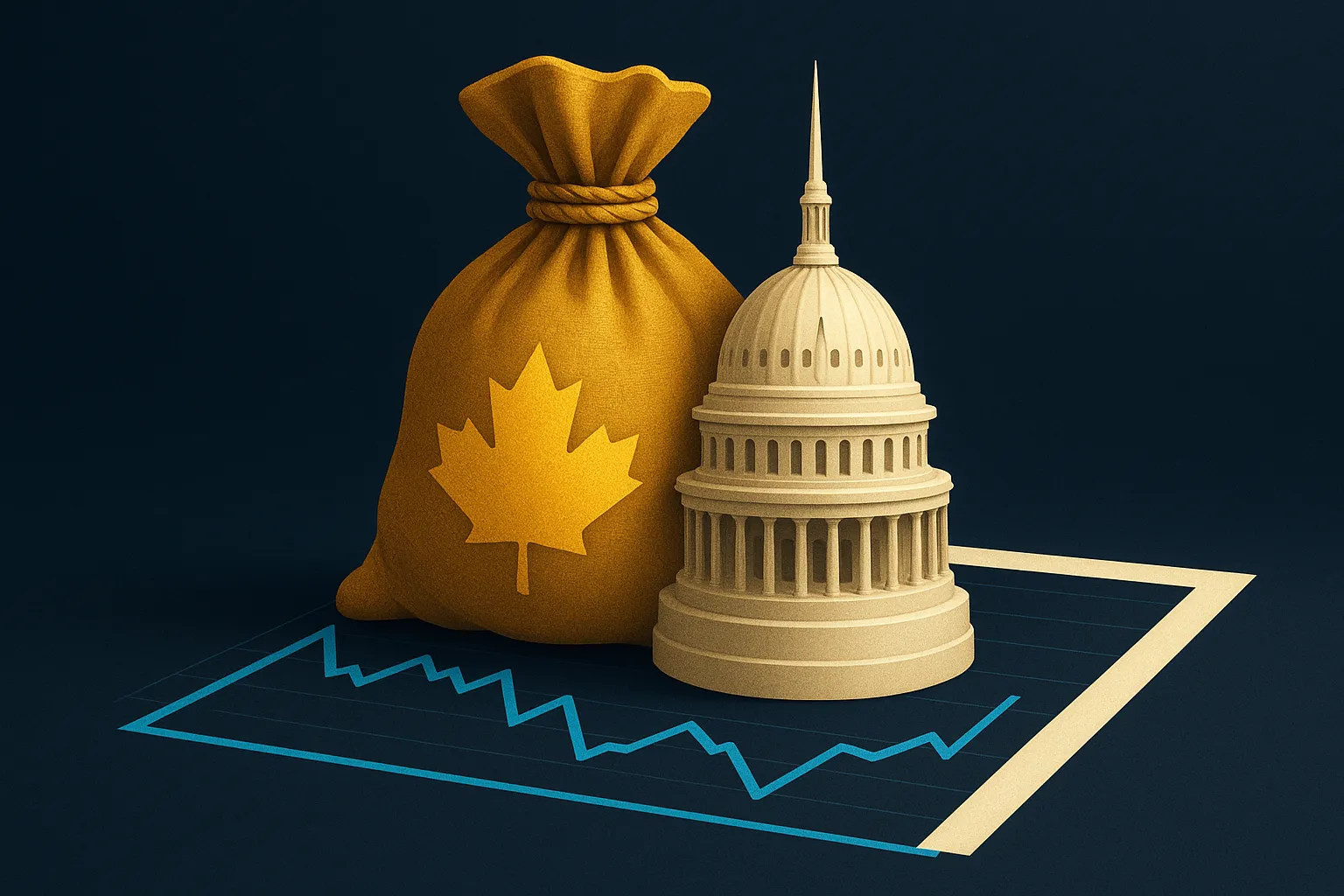
Good morning, finance watchers. The federal government just dropped a bombshell that could reshape Canadian investment for decades, while all eyes turn to the Bank of Canada's rate announcement today at 10:00 AM ET.
Canada Strong Fund: A $15 Billion Game Changer
Finance Minister François-Philippe Champagne unveiled Canada's first sovereign wealth fund yesterday (April 28, 2026), marking a historic shift in how Ottawa deploys capital. The Canada Strong Fund will invest in strategic Canadian projects and companies, with an initial allocation that RBC Wealth Management reports could reach $15 billion over five years.
Here's what makes this fund unique: unlike traditional sovereign wealth funds that invest globally, this one comes with a retail component. Everyday Canadians will be able to buy into the fund directly, potentially earning returns from infrastructure projects, clean energy ventures, and Canadian tech companies. Think of it as a government-backed mutual fund with a patriotic twist.
The timing isn't coincidental. With private capital fleeing to higher U.S. yields and domestic investment lagging, Ottawa's playing banker of last resort. RBC's analysis suggests the fund could fill critical gaps in sectors where traditional lenders have retreated, particularly in green energy transitions and northern infrastructure projects.
Bank of Canada: The Pause That Refreshes?
All market eyes pivot to Bank of Canada headquarters this morning, where Governor Tiff Macklem faces a classic central banking dilemma. With the overnight rate sitting at 2.25%, the consensus expects another hold — marking the fourth consecutive pause since December 2025.
The numbers tell a conflicted story. March inflation jumped to 2.4% (from February's 1.8%), driven largely by oil prices spiking amid Middle East tensions. Yet core inflation measures remain anchored near 2%, giving Macklem room to breathe. FXStreet reports that 22 of 25 economists surveyed expect no move today, with the holdouts betting on a surprise 25-basis-point cut.
Why the caution? Unemployment has improved to 6.7% from September's 7.1% peak, but GDP contracted 0.6% (annualized) in Q4 2025. That's not exactly the robust growth story that justifies rate hikes, especially with CUSMA trade tensions looming and household debt servicing costs already stretched.
The C.D. Howe Prescription: Patience Until October
The C.D. Howe Institute's Monetary Policy Council delivered its verdict on April 23, 2026: hold steady at 2.25% not just today, but through October 2026. All nine council members agreed on maintaining current rates for the next meeting, a rare show of unanimity from the usually fractious group of economists and former central bankers.
Their logic? Let the oil shock work through the system while monitoring whether wage growth accelerates. The council projects a modest 25-basis-point hike by April 2027, bringing rates to 2.5% — still well below the 3.5% neutral rate most economists peg for Canada.
| Institution | April 29 Call | Year-End 2026 | Key Rationale |
|---|---|---|---|
| C.D. Howe Institute | Hold at 2.25% | 2.25% | Wait for wage data |
| Market Consensus | Hold at 2.25% | 2.50-2.75% | Inflation pressures |
| FXStreet Survey | Hold at 2.25% | 2.25% | Weak growth outlook |
What's Coming Down the Pipeline
This week's economic calendar remains packed. Statistics Canada will release GDP by industry data, which Edward Jones flags as crucial for understanding whether the Q4 contraction was a blip or the start of something worse. Early indicators suggest manufacturing and retail trade continued struggling into Q1 2026.
On the housing front, it's radio silence. Following yesterday's Spring Economic Update, the Department of Finance confirmed no additional announcements scheduled for this week or next. That means mortgage holders waiting for relief programs or first-time buyer incentives will need to content themselves with the existing measures announced in Budget 2026.
The Borrower's Perspective
For Canadian borrowers, today's expected rate hold offers breathing room but no celebration. Variable-rate mortgage holders paying around 5.45% (based on prime minus 0.80%) won't see relief anytime soon. The silver lining? Fixed mortgage rates have already priced in the pause, with 5-year terms hovering around 4.8% — down from last year's 5.5% peaks.
The Canada Strong Fund could indirectly benefit borrowers by keeping more investment capital within Canadian borders. If the fund succeeds in its infrastructure mandate, it could boost employment and economic growth without the Bank of Canada needing to slash rates to stimulate activity. That's the theory, anyway.
Business borrowers might find new financing avenues through the fund's strategic investment arm, particularly for projects aligned with federal priorities like clean energy transition or critical minerals extraction. Traditional business loans remain available, but the fund could offer patient capital for longer-term ventures.
Reading the Tea Leaves
Three factors will dominate Canadian financial headlines through spring 2026: First, execution risk on the sovereign wealth fund. Ottawa's track record with investment vehicles (remember the Infrastructure Bank?) suggests healthy skepticism is warranted. Will this fund actually deploy capital efficiently, or become another bureaucratic money pit? Second, the Bank of Canada's communication challenge. Macklem must thread the needle between acknowledging inflation risks and avoiding panic about growth. Watch his 11:00 AM press conference for subtle shifts in language about the "balance of risks." Third, the data dependency trap. With Statistics Canada's GDP numbers due this week and employment data next Friday, markets remain hypersensitive to every economic indicator. The challenge? Much of this data reflects winter conditions and oil shocks that may already be reversing.
Frequently Asked Questions
When will the Bank of Canada announce its rate decision today?
The Bank of Canada will announce its rate decision at 10:00 AM ET on April 29, 2026, with Governor Macklem's press conference following at 11:00 AM ET. Markets widely expect the overnight rate to remain unchanged at 2.25%.
How much will the Canada Strong Fund invest in its first year?
While the Department of Finance hasn't specified first-year allocations, RBC's analysis of the Spring Economic Update suggests initial investments could reach $3 billion in fiscal 2026-27, ramping up to $15 billion over the fund's first five years of operation.
What's the minimum investment for retail investors in the Canada Strong Fund?
The government hasn't announced minimum investment thresholds for the retail component of the Canada Strong Fund. Based on similar government-backed investment products, analysts expect minimums between $500 and $5,000 when the retail platform launches in Q3 2026.
For borrowers navigating these uncertain waters, staying informed matters more than ever. Check our research section for detailed analysis of how rate decisions impact your borrowing costs.
Sources & References
- 1canada.caGovernment of Canada releases 2026 Spring Economic Update
- 2bankofcanada.caBank of Canada Interest Rate Announcement
- 3fxstreet.comBoC set to keep interest rate unchanged awaiting further economic data
- 4cdhowe.orgC.D. Howe Institute Monetary Policy Council Urges Bank of Canada to Hold Overnight Rate at 2.25 Percent
- 5edwardjones.caStock Market Weekly Update
Sources
- Government of Canada releases 2026 Spring Economic UpdateYesterday
- Bank of Canada Interest Rate AnnouncementToday
- BoC set to keep interest rate unchanged awaiting further economic dataToday
- C.D. Howe Institute Monetary Policy Council Urges Bank of Canada to Hold Overnight Rate at 2.25 Percent6 days ago
- Stock Market Weekly Update