
Residential buildings in Peterborough, Ontario, generate 118,000 metric tonnes of greenhouse gas emissions annually, accounting for 24% of the city’s total output. As we mark Earth Day 2026, the financial case for retrofitting these homes has never been stronger, especially with hydro rates recently jumping 29% for Southern Ontario residents. Taking out a personal loan to go green is no longer just an environmental choice—it is a calculated move to protect your long-term loan affordability.
While the federal Canada Greener Homes Loan closed to new applicants in October 2025, the void has been filled by robust provincial and municipal programs. Whether it is through local improvement charges or the Home Renovation Savings Program (HRSP), the goal is the same: reduce energy waste so you can keep more money in your pocket.
By the Numbers
- 4.50% Fixed Rate: Interest rate for Local Improvement Charge (LIC) loans through Better Homes Peterborough as of February 2026.
- $3,200 Savings: Maximum annual electricity bill reduction for typical detached Southern Ontario homes using solar net metering according to Solar-X.
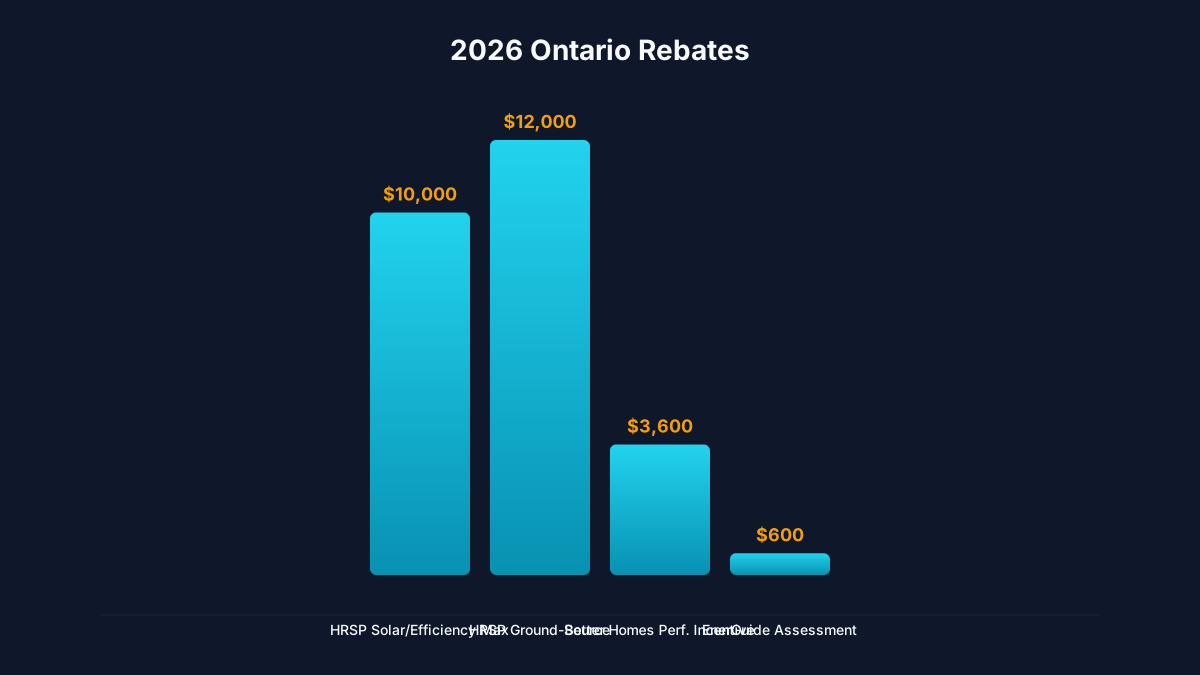
- $10,000 Rebate: The maximum available incentive under the Ontario Home Renovation Savings Program (HRSP) in 2026.
- 24% Impact: The portion of total GHG emissions contributed by residential buildings in Peterborough as reported by the Federation of Canadian Municipalities.
- 29% Hike: The recent surge in Ontario hydro rates that has shortened the payback period for solar systems to 6-9 years.
The Shift to Municipal Financing
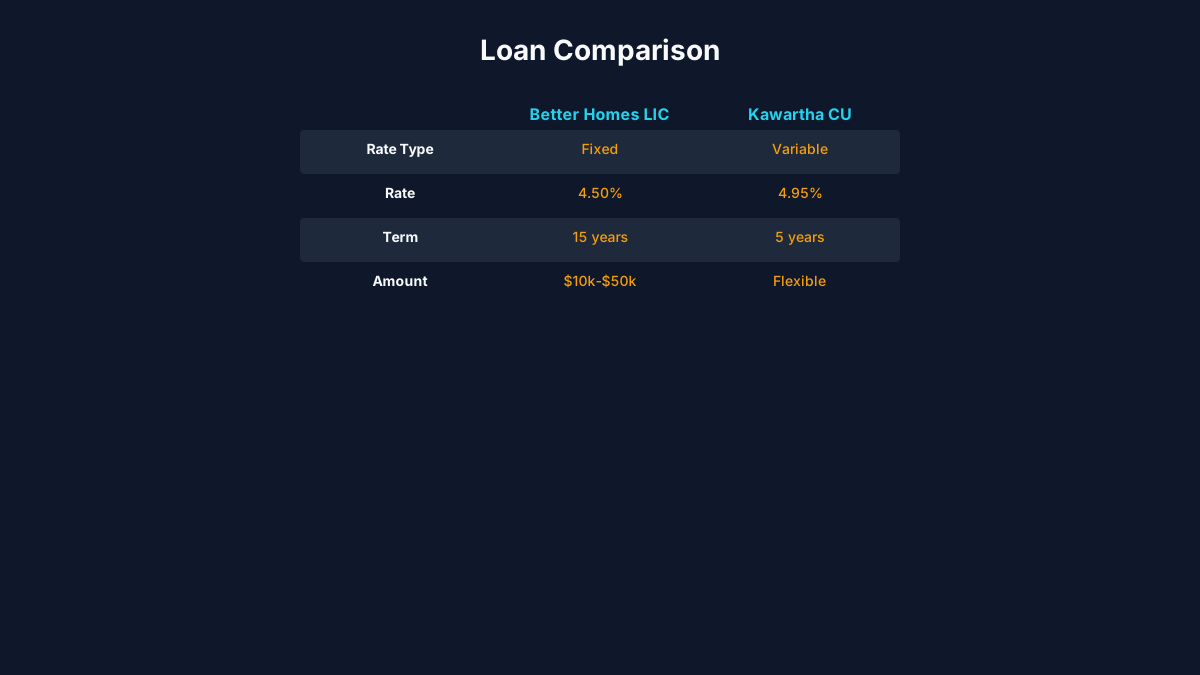
For many homeowners, the best way to fund a heat pump or solar array is through their property taxes. Better Homes Peterborough, funded by the Federation of Canadian Municipalities' Green Municipal Fund, relaunched its program on February 19, 2026. This program offers Local Improvement Charge (LIC) loans ranging from $10,000 to $50,000.
At a 4.50% fixed interest rate over 15 years, these loans are often more accessible than a traditional mortgage refinance for green upgrades. Because the debt is tied to the property title rather than the individual, the repayment moves with the home if you sell it. This unique structure allows homeowners to invest in high-impact tech like ground-source heat pumps, which EcoFlow notes can fetch rebates up to $12,000 under the HRSP for electrically heated homes.
Incentives That Lower Loan Balances
One of the most powerful features of current 2026 financing is the performance-based incentive. Better Homes Peterborough offers a $3,600 bonus if your retrofit achieves a 60% or greater reduction in energy use or emissions. This isn't just a check in the mail; it is applied directly to your loan balance after the retrofit is complete.
If you don't qualify for the top-tier 60% reduction, a standard $2,000 incentive is still available for those who incorporate air sealing with their heat pump or solar installation. According to Solar-X, these incentives effectively lower your debt-to-income ratio by reducing the principal of your green loan faster than traditional monthly payments alone.
The Role of Credit Unions
If the LIC model doesn't fit your needs, Kawartha Credit Union provides an alternative through March 2029. They offer a 4.95% variable interest rate on 5-year terms for efficiency upgrades. This path is ideal for smaller projects like battery storage, insulation, or air sealing.
Remember, to unlock most of these benefits, you must start with a pre-retrofit EnerGuide Home Energy Assessment. Better Homes Peterborough participants can receive a $600 rebate for this assessment, plus an extra $250 for air sealing, provided they achieve at least 10% improvement in air tightness.
Solar and the 6-Year Payback
With hydro rates climbing, the math on solar has shifted dramatically. Under current net metering programs, a well-sized solar system for a detached Southern Ontario home can generate annual savings between $2,200 and $3,200. Combined with a personal loan and the HRSP rebates, the payback period has dropped to between 6 and 9 years.
| Feature | Better Homes LIC Loan | Kawartha Credit Union Loan | HRSP Rebate (Max) |
|---|---|---|---|
| Interest Rate | 4.50% Fixed | 4.95% Variable | N/A (Cash Back) |
| Term Length | Up to 15 Years | 5 Years | N/A |
| Max Amount | $50,000 | Project Based | $10,000 |
| Repayment | Property Taxes | Monthly Installments | Applied to project cost |
Efficiency is the New Home Equity
Energy-efficient homes are increasingly valued in the Canadian real estate market. By using a home equity line of credit or a specialized green loan to install a cold-climate air-source heat pump, you aren't just saving on hydro; you are building equity. In Ontario, electrically heated homes can claim up to $7,500 ($1,250 per ton) for air-source systems through the HRSP, which has been extended through November 2026.
By leveraging these tools, you can calculate payment schedules that are often lower than the monthly energy savings the upgrades provide. This creates a cash-flow-neutral scenario where the house pays for its own upgrades.
Frequently Asked Questions
Can I still get the Canada Greener Homes Loan in 2026?
No, the Canada Greener Homes Loan stopped accepting new applications on October 2, 2025. Homeowners must now look to municipal programs like Better Homes Peterborough or provincial rebates like the Home Renovation Savings Program (HRSP).
What is the minimum energy savings required for the $3,600 incentive?
To qualify for the $3,600 performance-based incentive, your home must achieve at least a 60% reduction in energy use or greenhouse gas emissions. If you fall below this threshold, you may still qualify for a standard $2,000 incentive.
Do I need an energy audit before starting work?
Yes. Both the HRSP and Better Homes Peterborough require a pre-retrofit EnerGuide Home Energy Assessment. These assessments cost money upfront, but rebates of up to $600 are available for participants to cover these costs.
Ready to see how a green upgrade fits your budget? Use our compare loans tool to find the best rates for your home efficiency project.