
Canadian homeowners have been on a rollercoaster for the past few years, and the ride isn't quite over. With the Bank of Canada's key interest rate currently sitting at 3.25% as of April 2026 (Bank of Canada), all eyes are on the upcoming May rate announcement.
For anyone with a variable-rate mortgage or home equity line of credit, this decision is more than just a headline—it directly impacts your wallet. Let's break down what the experts are expecting and what it could mean for you.
By the Numbers: The Economy in April 2026
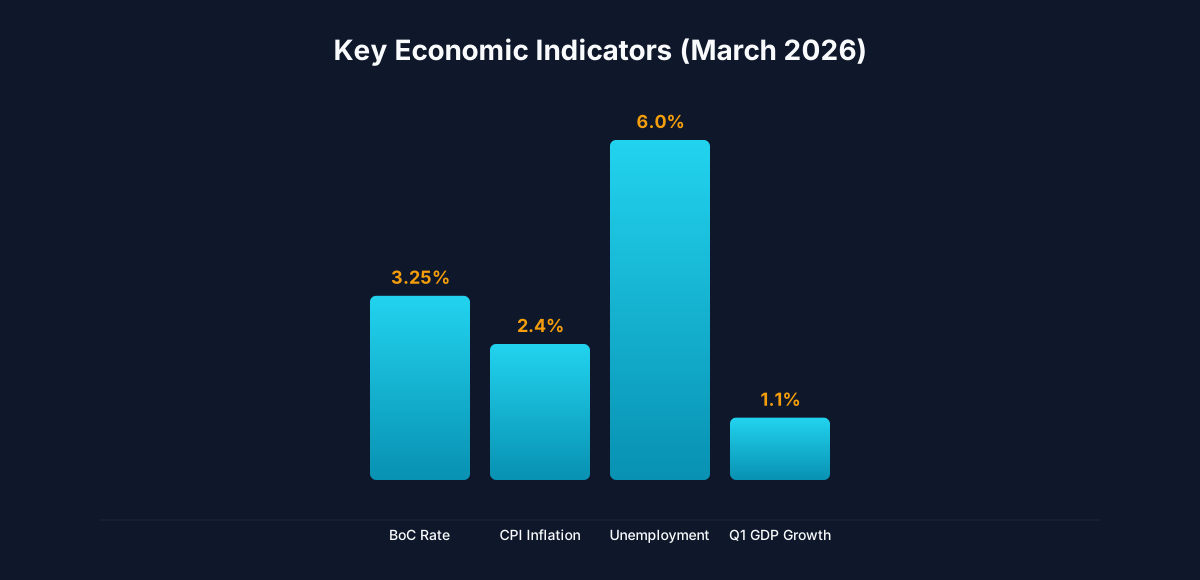
To understand where the Bank of Canada might go, we first need to look at the data they're using to make their decision. Here are the key vital signs for the Canadian economy right now:
- 3.25%: The Bank of Canada's current policy interest rate, which has been held steady for the last two announcements (Bank of Canada).
- 2.4%: The annual inflation rate (CPI) for March 2026. This is down significantly from past highs but remains stubbornly above the Bank's 2% target (Statistics Canada).
- 6.0%: Canada's unemployment rate as of March 2026, indicating a slight cooling in the job market (Statistics Canada).
- 1.1%: The annualized growth of Canada's real GDP in the first quarter of 2026, suggesting the economy is growing, but slowly (Statistics Canada).
What's on the Bank of Canada's Dashboard?
The Bank of Canada (BoC) has a primary mission: keep inflation low and stable. Their target is 2%. While the current inflation rate of 2.4% (Statistics Canada) is getting closer, it's not there yet. This is the main reason they aren't in a rush to cut rates.
At the same time, the BoC is watching for signs of economic weakness. An unemployment rate of 6.0% (Statistics Canada) and sluggish GDP growth show that higher interest rates are working as intended—they're slowing the economy down to cool price pressures. The challenge is to not slow it down too much and trigger a deep recession.
This balancing act is made even trickier by the high levels of household debt. The latest data showed the household debt-to-income ratio was 178.5% in the fourth quarter of 2025 (Statistics Canada). The Bank knows that many Canadian families are feeling the squeeze, which is a powerful argument against any further rate hikes.
The May 2026 Rate Decision: Hold, Cut, or Hike?
Given the current data, what's the most likely outcome for the May 2026 rate announcement?
Scenario 1: Hold (Most Likely)
The overwhelming consensus among economists is that the Bank will hold the policy rate at 3.25%. The narrative is one of "cautious patience." Inflation is not yet decisively back at the 2% target, and the Bank needs more data to be sure the downward trend will stick. A hold gives them more time to watch how the economy evolves.
Scenario 2: Cut (Less Likely)
A rate cut in May would be a surprise. It would signal that the BoC is more worried about the slowing economy than it is about the last bit of inflation. This would likely only happen if the next batch of economic data, like the April jobs report, comes in significantly worse than expected. This remains an outside possibility.
Scenario 3: Hike (Extremely Unlikely)
Let's be clear: a rate hike is effectively off the table. The economic conditions do not support further tightening. The painful rate hiking cycle that began years ago, which saw rates climb from near-zero, is firmly in the rearview mirror. The conversation has shifted from "how high?" to "how long until we cut?"

What This Means for Variable-Rate Mortgage Holders
Your variable-rate mortgage is directly tied to your lender's prime rate, which moves in lockstep with the Bank of Canada's overnight rate. So, the BoC's decision matters a great deal.
If the Bank holds its rate at 3.25%, your lender's prime rate will also stay put. For those with an adjustable-rate mortgage (where the payment changes with every prime rate move), this means your next mortgage payment will be the same as your last one. It's a moment of stability, but likely not the relief you've been hoping for.
For those with a variable-rate mortgage with fixed payments, a rate hold is also good news. It means your amortization won't stretch out any further, and more of your payment will go towards paying down your principal. Many homeowners hit their "trigger rate" in the past, where their fixed payment no longer covered the interest portion. A stable rate environment helps stop the bleeding.
It's a good time to revisit your budget and calculate your loan payment, running a few a scenarios to see how a future cut—or an unexpected hold—would affect your finances.
Should You Lock In to a Fixed Rate?
This is the million-dollar question for every variable-rate holder. Locking into a fixed rate offers certainty. Your payment will not change for the entire term, which can be a huge relief for budgeting and peace of mind. However, you may pay a premium for that certainty, and if the BoC starts cutting rates aggressively later in 2026 or 2027, you could miss out on those savings.
Staying variable is a bet that rates will fall sooner rather than later. If you have a healthy financial cushion and can tolerate the risk of rates staying higher for longer, you could end up paying less interest over time. There's no single right answer—it comes down to your personal financial situation and risk tolerance. You can always use a tool to compare loans and see what fixed rates are available today.
| Feature | Variable-Rate Mortgage | 3-Year Fixed Mortgage | 5-Year Fixed Mortgage |
|---|---|---|---|
| Current Interest Rate | Varies by lender (typically Prime - a discount) | Varies by lender | Varies by lender |
| Payment Stability | Low (payments change with prime rate) | High (payment is fixed for 3 years) | Highest (payment is fixed for 5 years) |
| Potential Savings | High, if rates fall as predicted | Medium, if rates are higher in 3 years | Lower, as you're locked in for a longer period |
| Flexibility | Generally lower penalty to break than a fixed-rate mortgage. | Penalty to break can be significant (usually IRD). | Penalty to break can be significant (usually IRD). |
| Best For... | Homeowners with high risk tolerance and a cash buffer. | Those who want stability but expect rates to fall eventually. | First-time buyers or those on a tight budget needing certainty. |
If your debt load is becoming unmanageable, exploring options like consolidating debt with a personal loan or a home equity loan could provide a path to a more manageable single payment.
Frequently Asked Questions
What is the Bank of Canada's overnight rate?
The overnight rate is the interest rate at which major financial institutions borrow and lend one-day funds among themselves. It's the Bank of Canada's primary tool for conducting monetary policy, and it influences all other interest rates in the economy, from mortgages and car loans to savings accounts.
If the BoC holds the rate, does my variable mortgage payment change?
It depends on your mortgage type. If you have an adjustable-payment variable mortgage, your payment will not change. If you have a fixed-payment variable mortgage, your payment amount also won't change, but the portion of that payment going towards your principal versus interest might adjust slightly. A stable rate means no major changes.
Is now a good time to refinance or switch my mortgage?
It can be, but it depends entirely on your specific situation. You need to consider your current interest rate, the penalty to break your existing mortgage term, your financial goals, and your outlook on where interest rates are headed. It's best to talk to a financial advisor and compare current offers to see if the math works in your favour.
With rate cuts on the horizon—even if they're not happening in May—clarity is coming. Understanding your options is the first step to making the best decision for your financial future. Use our AI loan advisor to get a personalized estimate of what you could qualify for today.